

Natural hair-care products have become increasingly popular among people who want simpler ingredient lists and botanical alternatives to conventional styling products. Hair oils, in particular, appeal to those dealing with dry ends, frizz, rough beard texture, or scalp-care concerns. But an oil containing organic ingredients is not automatically effective, and claims about stronger hair or reduced shedding deserve a closer look.
Barebone is a botanical personal-care brand offering separate oils for the scalp, hair lengths, and beard. Its product range includes Growth Oil, Hair Oil, Beard Oil, and two bundled routines. The company says its products are made in small batches in Portland, Oregon, using certified organic botanicals, cold-pressed plant oils, and steam-distilled essential oils.
You can explore the official Barebone website to see its products and the brand’s approach to botanical hair care. Before buying, it is also worth checking Barebone’s presence on Trustpilot to see whether independent customer feedback is available. At the time of this research, I could not identify a substantial, clearly attributable Trustpilot review profile for this particular brand.
So, is Barebone worth considering, or are you mainly paying for attractive packaging and natural-ingredient positioning? This review examines its product range, formulations, ingredient transparency, prices, application instructions, customer feedback, and shopping policies. It is based on publicly available product information and independent research, not personal product testing.
What Is Barebone?
Barebone is a hair- and beard-care brand focused on botanical oil formulations. Instead of offering a large collection of shampoos, conditioners, styling creams, and treatments, the company concentrates on oils intended for three main areas: the scalp, hair lengths, and beard.
Its approach is built around using plant oils and essential oils as part of a regular grooming routine. The brand presents hair care as a combination of targeted scalp treatments, conditioning for dry lengths, and daily beard maintenance.
Barebone’s Background and Brand Overview
According to its official story, Barebone began with a simple idea: the ingredients people consider when choosing food and household products should also matter when choosing personal-care products.
The company says it started looking more closely at conventional hair-care formulations, particularly where ingredients came from and what purpose they served. That interest led it toward botanical oils and the development of products for scalp, hair, and beard care.
Barebone states that its oils are made in small batches in Portland, Oregon. It also says it oversees the blending, inspection, dating, and tracking of each batch rather than relying entirely on large-scale outsourced production.
The brand’s current catalogue is relatively focused. Rather than presenting dozens of different treatments, it offers a small selection of oils and combination sets. This makes the product range fairly easy to understand, although shoppers looking for a complete hair-care routine with shampoo, conditioner, and styling products will need to buy those elsewhere.
What Makes Barebone Different From Other Hair and Beard Care Brands?
Barebone’s main distinction is its focus on concentrated botanical oils. Its products combine carrier oils, such as jojoba, argan, almond, and castor oil, with essential oils such as rosemary, lavender, peppermint, and cedarwood.
The brand also emphasizes a few formulation and production choices:
- Certified organic ingredients, according to the company’s product and standards information
- Cold-pressed, unrefined plant oils
- Steam-distilled essential oils
- Small-batch production in Portland
- Amber glass packaging
- Formulations made without silicones, synthetic fragrance, parabens, sulfates, and phthalates, according to the brand
These choices may appeal to shoppers who prefer botanical formulations and want to see a complete ingredient list rather than a vague description of a product’s fragrance or botanical blend.
However, natural ingredients do not automatically make a product suitable for every person. Essential oils can cause irritation or allergic reactions in some users, and a product’s suitability depends on its individual formulation and the user’s skin sensitivity.
Barebone’s Approach to Natural and Organic Personal Care
Barebone describes its products as being made with certified organic botanicals. Its standards page explains that the company uses cold-pressed plant oils and steam-distilled essential oils, with each ingredient selected for its intended role in the formula.
The company also emphasizes its packaging. It says it uses recyclable amber glass bottles, FSC-certified label materials, water-based inks, and compostable protective paper for shipping.
These are useful details for shoppers who consider packaging and ingredient sourcing when choosing personal-care products. Still, it is important to distinguish between what the brand states and what has been independently verified. The company’s website provides its own formulation and production claims, but I did not find independent certification documentation covering every product or the complete manufacturing process.
What Products Does Barebone Offer?
Barebone’s range centers on three individual oils and two bundled routines. Each product has a different intended use, so choosing between them is more about your grooming needs than selecting the most expensive option.
Prices below reflect the displayed official shop listing found during research and may change.
| Product | Displayed price | Size | Main purpose |
|---|---|---|---|
| Growth Oil | $42 | 50 mL | Scalp care |
| Hair Oil | $34 | 50 mL | Dry lengths and frizz |
| Beard Oil | $34 | 50 mL | Beard conditioning |
| Complete Hair Ritual | $68 | 2 × 50 mL | Scalp and hair-length routine |
| Complete Beard Ritual | $68 | 2 × 50 mL | Scalp and beard routine |
Barebone Growth Oil for Scalp Care
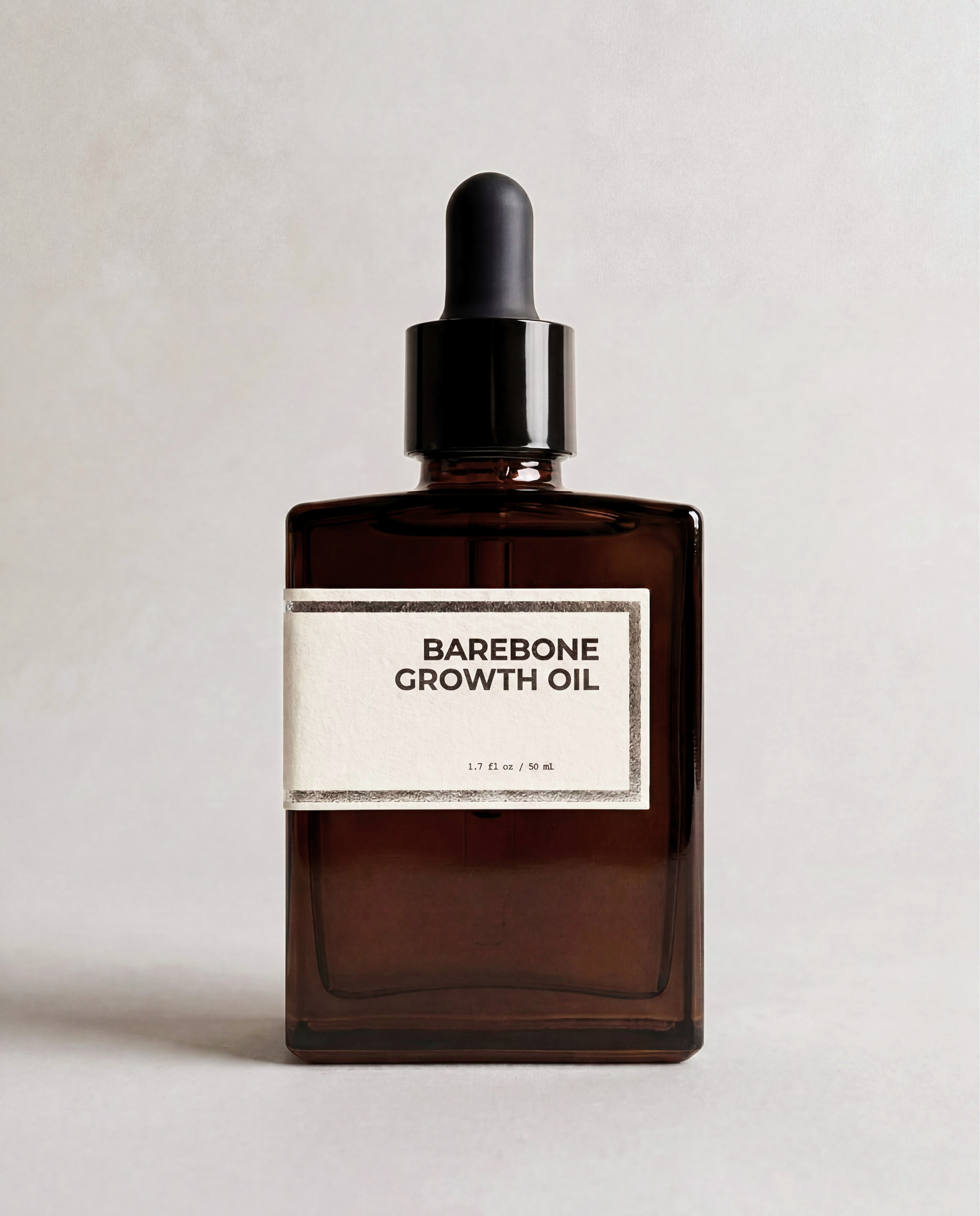
Displayed price: $42 · 1.7 fl oz / 50 mL
Growth Oil is Barebone’s scalp-focused formula. The company describes it as a concentrated blend intended to support scalp care, reduce shedding, and encourage healthier-looking hair growth.
Its listed ingredients include:
- Jamaican black castor oil
- Golden jojoba oil
- Sweet almond oil
- Argan oil
- Pumpkin seed oil
- Rosemary oil
- Peppermint oil
- Geranium oil
- Lavender oil
- Tea tree oil
- Thyme oil
- Cedarwood oil
This is the most ingredient-dense formula in the individual product range. It combines several carrier oils with essential oils, giving it a different purpose from the lighter Hair Oil, which is designed mainly for the hair lengths.
The brand recommends applying a small amount directly to the scalp and massaging it with the fingertips. For a weekly treatment, it suggests leaving the oil on for at least 30 minutes or overnight before washing.
One point worth keeping in perspective is the name. Growth Oil is marketed around hair-growth support, but the product listing alone does not establish that it can regrow hair or treat medical hair loss. Its ingredients and intended use are worth examining, but buyers should not treat the marketing description as clinical proof.
Barebone Hair Oil for Dry and Damaged Hair
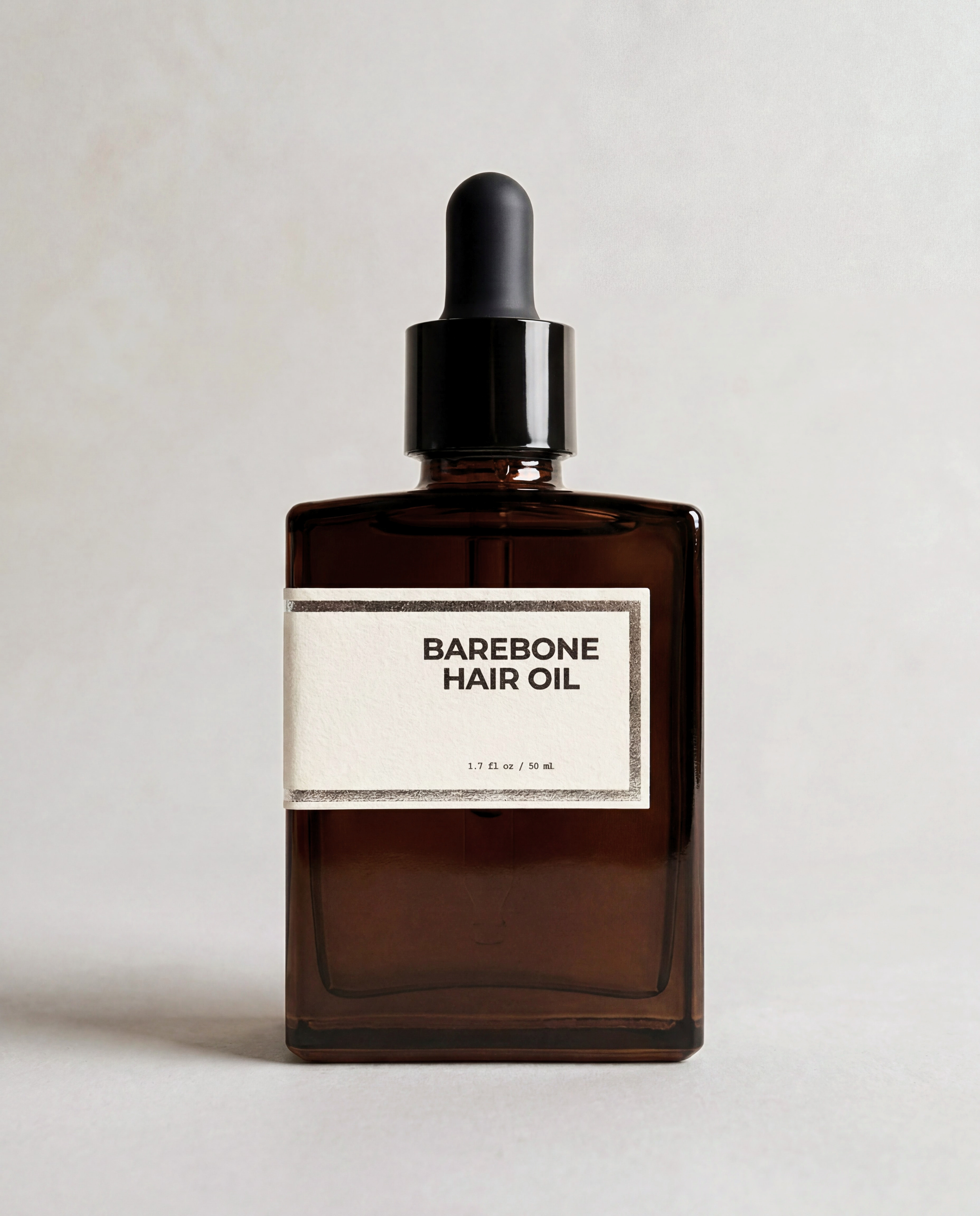
Displayed price: $34 · 1.7 fl oz / 50 mL
Hair Oil is designed for the lengths and ends rather than being primarily a scalp treatment. Barebone positions it as a conditioning product for dry strands, frizz, flyaways, and hair that feels rough or difficult to manage.
Its listed ingredients include:
- Golden jojoba oil
- Argan oil
- Sweet almond oil
- Avocado oil
- Olive oil
- Lavender oil
- Lemongrass oil
- Rosemary oil
- Cedarwood oil
Compared with Growth Oil, this formula includes avocado and olive oils and does not list the same combination of castor, pumpkin seed, peppermint, and tea tree oils.
Barebone recommends using one to three drops for daily styling, spreading the oil between the palms, and working it through the mid-lengths and ends. For a more intensive treatment, the brand suggests applying it more generously and leaving it on for at least 30 minutes or overnight before washing.
This product may be the more relevant choice for someone whose main concern is dry ends, surface frizz, or a lack of softness rather than scalp-focused care. Fine hair may need less product than thicker or more porous hair, so starting with a small amount makes sense.
Barebone Beard Oil for Conditioning and Grooming
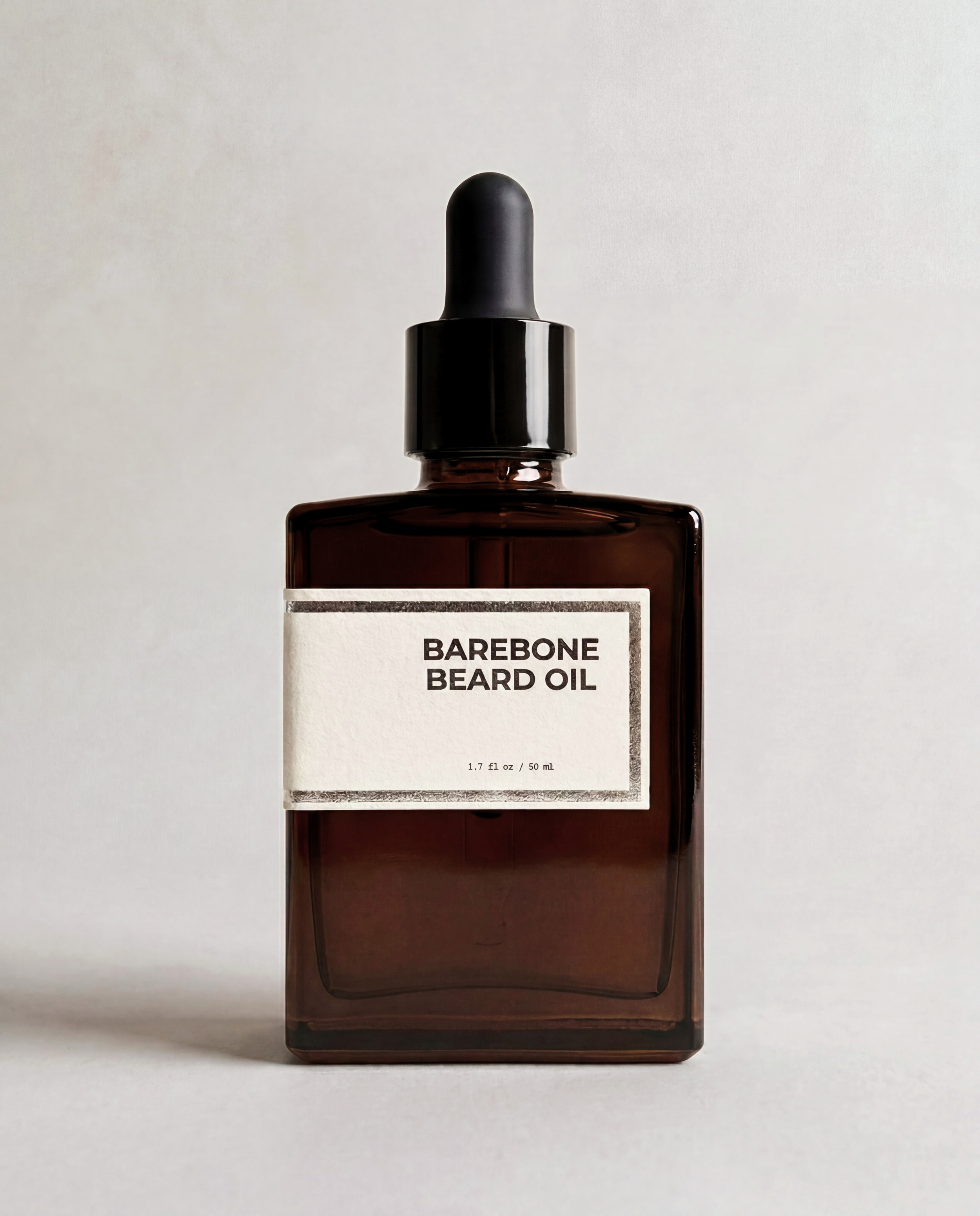
Displayed price: $34 · 1.7 fl oz / 50 mL
Beard Oil is designed for coarse facial hair and the skin underneath it. The brand positions it as a conditioning formula that helps make beard hair easier to manage while caring for the skin beneath fuller growth.
The formula includes botanical oils such as jojoba, castor, almond, and argan, alongside essential oils used in the brand’s other blends.
Barebone recommends starting with one to three drops, warming the oil between the palms, and working it through the beard. The fingertips should reach the skin underneath rather than leaving all the product on the surface of the facial hair.
The remaining oil can then be distributed from the roots to the ends, followed by a beard comb or brush.
For people with short beards, a small amount may be enough. Longer or fuller beards may need more, although the correct quantity depends on hair density and how readily the beard absorbs the oil.
The Beard Oil is a grooming product rather than a treatment for beard-growth conditions. Its practical appeal is conditioning and manageability, not a guaranteed increase in beard density.
Complete Hair and Beard Ritual Sets
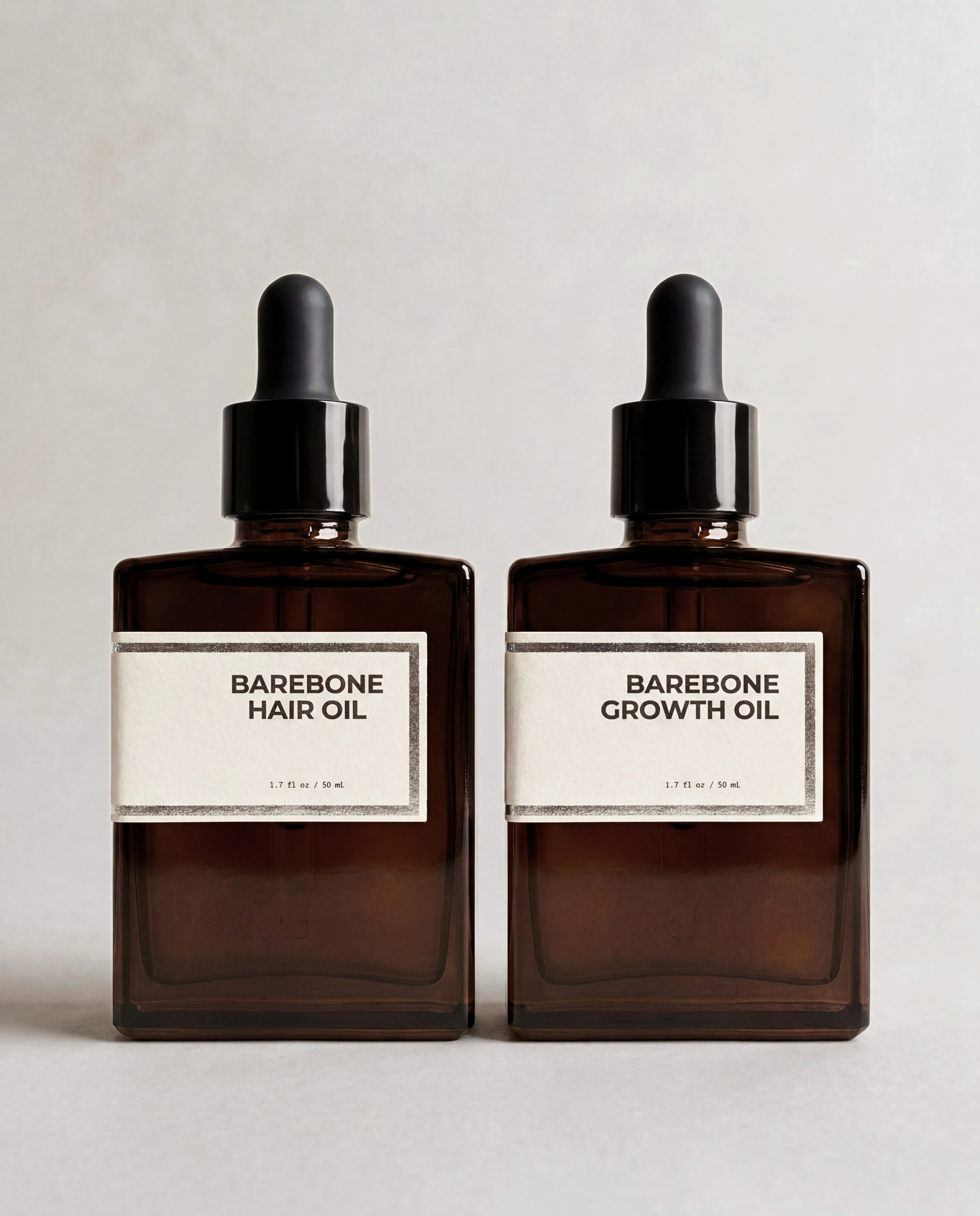
Barebone also sells two combinations for people who want to use more than one oil.
Complete Hair Ritual — $68
This set combines Growth Oil and Hair Oil, with one bottle intended for scalp care and the other for the hair lengths and ends. It gives shoppers a two-step routine without needing to select the individual products separately.
Complete Beard Ritual — $68
This set combines Growth Oil and Beard Oil. The idea is to use one product for scalp care and the other for conditioning the beard and skin underneath it.
Both sets contain two 50 mL oils. At the displayed prices, buying the two products separately would cost $76 for the Hair Ritual and $76 for the Beard Ritual, compared with the listed $68 bundle price. That represents an $8 difference, or roughly 10.5% off the combined individual prices.
The bundles therefore offer a modest saving if you already intend to use both products. They are less compelling if you only need one oil or are unsure whether a multi-step routine suits your hair and skin.
Barebone Product Quality and Ingredients
Ingredients are one of the most important parts of evaluating Barebone. The brand puts botanical sourcing and formulation at the center of its identity, so shoppers should be able to understand what each product contains and why those ingredients are included.
The good news is that Barebone publishes full ingredient lists for its products. This gives customers more information than a product description that simply says it contains a natural oil blend.
Key Natural and Organic Ingredients Used in Barebone Oils
Barebone uses a combination of carrier oils and essential oils. Each group serves a different purpose in an oil formulation.
Jojoba oil
Jojoba appears across the brand’s product range. It is commonly used in personal-care products as an emollient ingredient, helping condition the hair and improve its feel. Barebone describes it as a balancing oil for the scalp and a conditioning ingredient for the hair shaft.
Argan oil
Argan oil is included in the Hair Oil, Growth Oil, and Beard Oil. It is used in cosmetic formulations to soften hair and improve smoothness and shine. It is particularly relevant to products designed for dry lengths and coarse facial hair.
Castor oil
Castor oil appears in Growth Oil and Beard Oil. It is a thicker oil that can coat the hair shaft and help improve the feel of dry strands. However, the presence of castor oil should not be treated as proof that a product can reverse hair loss or create new hair growth.
Sweet almond oil
Sweet almond oil is included in the brand’s formulations and is used as a conditioning ingredient. It can help soften hair and improve manageability. People with known almond or tree-nut allergies should review the full ingredient list carefully before use.
Pumpkin seed oil
Pumpkin seed oil is included in Growth Oil. Barebone positions it as part of its scalp-focused blend. Although pumpkin seed oil is discussed in hair-care contexts, the presence of the ingredient in a cosmetic oil does not establish that this particular formula has been clinically proven to increase hair growth.
Avocado and olive oils
These appear in Hair Oil and contribute to the formula’s conditioning focus. They are relevant for people looking to soften dry lengths and improve the feel of rough or frizzy hair.
Rosemary, peppermint, lavender, and other essential oils
Barebone uses several essential oils across its blends. These contribute to the products’ botanical scent profiles and are included for their intended cosmetic properties. However, essential oils are concentrated ingredients and may not suit every scalp or skin type.
The brand’s ingredient guide and formulation information provide more detail about its botanical choices. These descriptions are useful for understanding the company’s approach, although they should be read as brand explanations rather than independent clinical evidence.
Cold-Pressed Plant Oils and Steam-Distilled Essential Oils
Barebone highlights two extraction methods in its formulation standards.
Cold pressing is used to obtain plant oils without relying on high-temperature extraction. Steam distillation is a common method for extracting aromatic essential oils from plant material.
The brand says these methods help preserve the natural characteristics of the ingredients it selects. It also says that its oils are blended in small batches in Portland, with each batch measured, inspected, dated, and tracked.
These are relevant manufacturing details for shoppers who care about ingredient sourcing and production methods. However, the website does not provide independent batch-testing reports or a full set of third-party certificates for every product. The most accurate way to describe these practices is as the company’s stated formulation and production standards.
Formulation Standards, Ingredient Transparency, and Packaging
Barebone says its oils are formulated without silicones, synthetic fragrance, parabens, sulfates, and phthalates. It also publishes ingredient lists using INCI names, which makes it easier for shoppers to identify the individual components.
The packaging is another part of the brand’s positioning. Barebone says it uses amber glass bottles to limit light exposure and avoid direct contact between the formula and a plastic bottle. Its standards page also mentions FSC-certified label materials, water-based inks, and compostable protective paper.
This attention to ingredient lists and packaging is a positive point for shoppers who want to understand what they are purchasing. Still, the terms natural, botanical, and non-toxic should not be interpreted as meaning risk-free. Some natural ingredients can irritate the skin or trigger allergies, particularly when essential oils are involved.
Are Barebone Oils Free From Synthetic Fragrance and Other Additives?
According to the company’s standards page, Barebone formulates its oils without synthetic fragrance, silicones, parabens, sulfates, and phthalates.
That may appeal to shoppers who prefer to avoid those ingredients in hair and beard products. However, the products still contain essential oils, which naturally contribute aroma. A product without synthetic fragrance is not necessarily fragrance-free or suitable for people with fragrance sensitivities.
This distinction matters because essential oils can contain compounds associated with allergic contact dermatitis. Research published in the dermatology journal Contact Dermatitis examined essential-oil sensitization in patients who underwent patch testing. The findings reinforce that essential oils are not automatically harmless simply because they come from plants.
For people with sensitive skin, a history of contact allergies, or a reactive scalp, checking the ingredient list and testing a small area before regular use is a sensible precaution.
Is Barebone Suitable for Different Hair Types?
Barebone offers products for different grooming needs, but its website does not provide a comprehensive compatibility chart covering every hair type and scalp condition.
The best way to evaluate the range is to consider what each oil is designed to do and how much product different hair textures may need.
Barebone Oils for Dry, Normal, and Oily Hair
For dry hair, Hair Oil is the most directly relevant product. Its blend includes jojoba, argan, almond, avocado, and olive oils, and the brand positions it for dry lengths, rough ends, and frizz.
People with normal hair may prefer using a small amount on the ends when needed rather than applying a heavy oil treatment frequently.
For oily hair or an oily scalp, Growth Oil deserves more caution. Applying too much oil can leave the roots looking greasy, particularly if the scalp already produces a lot of sebum. Barebone itself advises using only a small amount and focusing on the scalp rather than saturating the hair.
Fine hair may also become weighed down more easily than thick or coarse hair. Starting with one or two drops on the lengths is a more cautious approach than applying a generous amount immediately.
Suitability for Curly, Wavy, and Straight Hair
The company does not publish enough model-specific or hair-type testing to establish that its products work equally well for curly, wavy, and straight hair.
However, the intended uses provide some practical guidance.
- Curly hair: Hair Oil may be useful for conditioning dry ends and smoothing frizz. The amount required will depend on curl pattern, density, and porosity.
- Wavy hair: A small amount may help smooth the lengths without making the hair look overly oily.
- Straight hair: Fine or straight hair may need a lighter application to avoid weighing down the strands.
- Thick or coarse hair: A more generous amount may be easier to distribute, particularly as a pre-wash treatment.
These are general considerations for oil-based hair products, not proven results from testing Barebone on different hair types.
Using Barebone Oils for Different Scalp Needs
Growth Oil is the product most directly aimed at scalp care. Barebone describes it as suitable for people who want to include scalp massage and botanical oils in their hair-care routine.
The company recommends sectioning dry hair, applying a small amount along the scalp partings, and massaging gently with the fingertips. Its ritual guide suggests starting with a weekly treatment before adjusting the frequency according to how the scalp responds.
However, there is an important distinction between cosmetic scalp care and medical treatment. Barebone’s Growth Oil should not be treated as a proven solution for alopecia, persistent shedding, dandruff, psoriasis, or other scalp conditions.
If hair loss is sudden, severe, or persistent, a dermatologist can help identify the underlying cause rather than relying on a cosmetic oil alone.
Are Barebone Beard Oils Suitable for Different Beard Types?
Beard Oil is designed for coarse facial hair and dry skin beneath the beard. Its intended purpose is to condition the beard and make it easier to manage.
People with short beards may need only a drop or two, while longer or fuller beards may require more product to distribute the oil throughout the hair.
The key is to work the oil into the skin underneath rather than applying it only to the visible beard. This is particularly relevant for people who experience dryness beneath fuller facial hair.
Those with sensitive facial skin should still review the essential-oil ingredients before using it regularly. A product designed for beard grooming is not automatically suitable for every skin type.
How to Use Barebone Hair, Scalp, and Beard Oils
Barebone provides specific application instructions for its products. This is useful because the amount of oil and the area of application differ depending on whether you are treating the scalp, conditioning hair lengths, or grooming facial hair.
How to Apply Growth Oil to the Scalp
Barebone recommends starting with dry hair and creating several partings to expose the scalp.
The application process is straightforward:
- Divide the hair into sections so the scalp is accessible.
- Apply a small amount of Growth Oil along the partings.
- Focus on the areas where you want to concentrate your scalp-care routine.
- Massage gently using the pads of your fingertips.
- Leave the oil on for at least 30 minutes before shampooing thoroughly.
The brand suggests beginning with one weekly treatment before adjusting according to how the scalp responds. It also says that more oil does not necessarily mean better results, so there is no need to saturate the scalp.
For daily use, Barebone recommends a smaller amount on targeted areas.
How to Use Hair Oil for Dry Ends and Frizz
Hair Oil can be used as a small finishing product or as a more generous pre-wash treatment.
For everyday styling, Barebone recommends:
- Start with one to three drops.
- Warm the oil between your palms.
- Work it through the mid-lengths and ends.
- Use the remaining oil on your hands to smooth flyaways.
For a weekly treatment, the company suggests applying more generously to dry or slightly damp hair, concentrating on rough or brittle-feeling lengths. Leave it on for at least 30 minutes or overnight before shampooing and conditioning as usual.
The brand also advises fine-haired users to use less product than people with thicker or more porous hair. This is a useful reminder because excessive oil can make the hair look separated or greasy rather than smooth.
How to Apply Beard Oil and Condition Facial Hair
Barebone’s Beard Oil is intended for daily grooming.
The brand recommends the following routine:
- Start with one to three drops.
- Rub the oil between your palms.
- Work your fingertips beneath the beard to reach the skin.
- Distribute the remaining oil from the roots to the ends.
- Use a beard comb or brush to spread it evenly and shape the hair.
Longer or fuller beards may need more product, but it is better to add a little at a time than apply too much at once.
Barebone suggests using the oil daily, preferably after washing. This can fit easily into an existing beard-care routine without requiring a separate treatment day.
Original vs. Clear: Which Barebone Formula Should You Choose?
Barebone offers Original and Clear versions of selected oils.
Original is the standard formulation. The company says it retains the natural tint of the unrefined botanicals, which may add warmth to very light hair.
Clear is a refined version designed for people with very light or tone-sensitive hair who want to avoid that natural tint. Barebone says the intended routine and benefits remain the same.
This distinction is particularly useful for people with blonde, silver, gray, or otherwise light-colored hair who are concerned about a tinted oil affecting the appearance of their strands.
Before ordering, check that the clarity option is available for the specific product you want.
Barebone Website and Shopping Experience
Barebone uses a relatively simple online storefront. The navigation focuses on the brand story, ingredients, standards, products, shipping, returns, and contact information.
This makes it reasonably easy to find the information that matters when comparing a small range of hair and beard oils.
Website Navigation and Product Information
The website separates the products into individual pages, with additional pages explaining the brand’s background, ingredients, and application routines.
Each product page includes information about its intended use, listed ingredients, bottle size, and recommended application method. Selected products also offer Original and Clear options.
This is a positive feature because shoppers can examine the formulation before purchasing rather than relying entirely on short marketing descriptions.
The product range is also relatively easy to navigate. There are only a few individual oils and two main bundles, so shoppers do not need to compare a large catalogue of overlapping treatments.
Ingredient Lists, Product Details, and Usage Instructions
Barebone provides full ingredient lists using INCI names. It also explains how the oils should be used, including the difference between daily application and a more generous weekly treatment.
The ritual guide is particularly useful because it explains where to apply each product:
- Growth Oil goes directly on the scalp.
- Hair Oil is worked through the mid-lengths and ends.
- Beard Oil is massaged through the facial hair and into the skin beneath it.
This product-specific guidance makes the range easier to understand. It also helps reduce the likelihood of using a scalp oil as a styling oil or applying too much product to fine hair.
Product Prices, Bundles, and Subscription Options
The current shop listing displays individual prices of $42 for Growth Oil, $34 for Hair Oil, and $34 for Beard Oil. The two Complete Ritual sets are listed at $68 each.
Some product pages also display a subscription option with a 15% saving. The availability and final price should be checked on the relevant product page before placing an order.
For shoppers who want only one product, purchasing individually is the simpler choice. Those who already plan to use two oils may find the bundle more economical.
The displayed prices are in US dollars. International shoppers should also consider currency conversion, payment-provider charges, and any applicable import costs before comparing the final price with local alternatives.
Checkout and Overall Shopping Experience
The storefront provides product selection, purchase-frequency options on selected listings, and a standard add-to-cart process.
However, I did not complete a purchase or verify the entire checkout process. Therefore, I cannot make a first-hand claim about payment processing, order confirmation, delivery notifications, or the speed of customer support.
The product information itself is reasonably detailed for a small brand. The main area where shoppers may want additional clarity is the shipping and returns information, which should be checked before ordering.
Barebone Customer Reviews and Brand Reputation
Customer feedback is one of the most useful ways to judge a personal-care brand. Product descriptions explain what a company intends its oils to do, but independent customer experiences can help show how products perform in everyday routines.
For Barebone, however, the amount of attributable independent feedback available during this research was limited. That makes it difficult to draw a confident conclusion about long-term customer satisfaction.
What Independent Customer Feedback Is Available?
I searched for customer feedback associated with Barebone and its official shop domain, including Trustpilot and Reddit discussions. I could not identify a substantial, clearly attributable collection of independent reviews for the specific Portland-based brand operating at shopbarebone.com.
Some third-party promotional and coupon pages display testimonials under similar Barebone Botanicals naming. However, those pages do not provide enough reliable verification to treat the testimonials as confirmed purchases from the current official store.
For that reason, I would not use those testimonials as evidence that the products consistently deliver particular results.
Readers can check Trustpilot’s search results for Barebone for any newly available feedback. The absence of a substantial review profile does not prove that customers are unhappy; it simply means there is not enough independent feedback to establish a representative customer consensus.
What Customers Say About Product Quality and Results
Because there is not enough verified customer feedback to establish a reliable pattern, it would be misleading to claim that customers consistently praise Barebone’s scent, texture, packaging, or hair-growth results.
The official product pages describe the intended benefits, ingredients, and application instructions, but those descriptions are written by the brand.
A careful buyer should separate three types of information:
- Published product details: Ingredients, sizes, prices, and usage instructions listed by Barebone.
- Brand claims: Statements about reduced shedding, scalp circulation, and healthier-looking hair.
- Independent results: Customer experiences or controlled testing that can help assess whether those claims translate into real-world outcomes.
At present, the first two categories are much better documented than the third.
Are There Reliable Reddit, Trustpilot, or Other Customer Reviews?
I could not find a meaningful, attributable Reddit discussion or a substantial Trustpilot profile specifically for this Barebone brand during the research.
That is worth mentioning because many established beauty and grooming brands have a larger online footprint, including detailed customer discussions about product performance, scent, irritation, value, and repeat purchases.
Barebone’s limited independent review footprint means shoppers have less third-party evidence to rely on before buying. It does not automatically make the brand unreliable, but it does make a cautious first purchase more sensible than immediately investing in multiple products or bundles.
What to Consider When Evaluating Barebone’s Reputation
When independent feedback is limited, there are a few practical checks worth making:
- Review the complete ingredient list before buying.
- Confirm the product size and current price.
- Check the official shipping and return terms.
- Contact the brand if you need clarification about an ingredient or formulation.
- Start with one product rather than purchasing the full range.
- Keep the order confirmation and product packaging until you are satisfied with the purchase.
These steps will not guarantee a particular result, but they can help reduce uncertainty when buying from a brand with a relatively small independent review footprint.
Barebone Pricing: Are Its Oils Worth the Money?
Barebone sits in the premium end of the small-batch botanical oil category. Its prices are higher than those of many basic carrier oils sold individually, but the products are presented as finished blends containing several plant and essential oils.
Whether the price is justified depends on how much value you place on the formulation, packaging, convenience, and brand positioning.
Barebone Hair and Scalp Oil Prices
The displayed official shop prices are:
| Product | Price | Bottle size |
|---|---|---|
| Growth Oil | $42 | 50 mL |
| Hair Oil | $34 | 50 mL |
| Beard Oil | $34 | 50 mL |
Growth Oil is the most expensive individual product. It contains the largest listed combination of carrier and essential oils among the individual formulas.
Hair Oil and Beard Oil are both listed at $34. Their intended uses are different, so the choice should depend on whether the priority is conditioning the hair lengths or maintaining beard texture and the skin beneath it.
Beard Oil and Complete Ritual Set Pricing
The Complete Hair Ritual and Complete Beard Ritual are each listed at $68.
At those prices, each bundle costs $8 less than buying its two component oils separately at their listed individual prices. This is a modest but real saving based on the displayed prices.
The sets may be useful for someone who wants to follow the brand’s two-step approach. However, they are not necessarily the best value for someone who only needs one oil or is trying the brand for the first time.
What You Get for the Price
The price includes more than a single basic carrier oil. Barebone presents its products as blended formulas using multiple botanical ingredients, and the company emphasizes small-batch production, ingredient sourcing, and amber glass packaging.
The full ingredient lists are also publicly available, which makes it easier to see what is included in each bottle.
The main limitation is the lack of extensive independent customer feedback or published product testing. Without that evidence, it is difficult to determine whether the finished formulas deliver enough additional performance to justify their premium over simpler oils.
For shoppers who value the specific blends and ready-to-use routines, the pricing may be reasonable. Those mainly looking for a basic conditioning oil may find simpler alternatives more economical.
Is Barebone More Expensive Than Other Botanical Hair Care Brands?
Barebone’s displayed prices place it above many basic single-ingredient oils, but a fair comparison requires products with similar bottle sizes, ingredient complexity, and intended uses.
A bottle of pure jojoba oil is not directly comparable with a finished blend containing jojoba, argan, almond, and several essential oils. At the same time, a longer ingredient list does not automatically mean better performance.
To judge value properly, compare:
- Cost per milliliter
- Number and type of ingredients
- Whether the ingredients are certified organic
- Packaging and dispensing design
- Product concentration and application quantity
- Independent customer feedback
- Return conditions and shipping charges
Barebone’s value proposition is strongest for people who want a ready-made botanical blend rather than buying and mixing several oils themselves.
Barebone Shipping, Returns, and Customer Support
Shipping and returns are important considerations when buying personal-care products online, particularly from a smaller brand.
Barebone’s official website displays a complimentary standard shipping message and provides separate links for shipping and returns. However, the detailed policy pages are hosted through a policy viewer that did not expose readable terms during this research.
Shipping Options, Costs, and Delivery Times
Barebone’s homepage displays a complimentary standard shipping message. That is useful, but it does not by itself establish whether free shipping applies to every destination, whether there is a minimum order value, or how long international deliveries take.
The company appears to offer a shipping-policy link in its website navigation. However, because the linked policy viewer did not provide readable terms during research, I cannot verify exact processing times, courier arrangements, international delivery estimates, or customs responsibilities.
International shoppers should be especially careful about the final landed cost. Depending on the destination, import duties, taxes, or payment-provider conversion fees may affect the total amount paid.
Before placing an order, use the shipping policy linked from Barebone’s official website and confirm any unclear details with the company.
Return and Refund Conditions
Barebone also provides a separate returns-policy link, but the detailed policy text was not readable in the policy viewer during this research.
As a result, I cannot responsibly confirm a specific return window, whether opened oils are eligible for return, who pays return shipping, or how long refunds take.
This is an important limitation for buyers because personal-care products can be difficult to return once opened. If you are unsure about a formula, contact the brand before purchasing and ask whether opened products can be returned if they cause irritation or do not meet expectations.
Do not assume that the return terms of another company using a similar Barebone name apply to this shop.
Customer Support and Order-Related Assistance
Barebone provides a contact section on its official website, but I could not verify a published response-time commitment or enough independent support experiences to assess how quickly the company handles order problems.
Before ordering, it may be worth contacting the brand if you have questions about:
- Whether a particular oil is suitable for your hair or beard routine
- The difference between Original and Clear formulations
- International shipping arrangements
- Return eligibility for opened products
- Ingredient sensitivities or product storage
A clear response before purchase can help buyers make a more informed decision, especially when the brand has limited independent customer feedback.
Pros and Cons of Barebone
Barebone has a focused product range and provides more ingredient information than many small personal-care storefronts. However, the limited independent review footprint and unclear policy details make it important to approach the brand with realistic expectations.
Advantages of Barebone Hair, Scalp, and Beard Oils
- Focused product range: Separate oils are available for scalp care, hair lengths, and beard conditioning.
- Detailed ingredient lists: The brand publishes full ingredient information using INCI names.
- Botanical formulations: The products combine carrier oils and essential oils.
- Organic ingredient claims: Barebone says it uses certified organic botanicals.
- Small-batch production: The company states that its oils are made in-house in Portland, Oregon.
- Original and Clear options: Selected products offer a choice for people concerned about natural tint in very light hair.
- Application instructions: The website explains daily use and more intensive weekly treatments.
- Bundle savings: The two Complete Ritual sets are listed below the combined price of their individual products.
- Amber glass packaging: The brand says it uses recyclable amber bottles and other considered packaging materials.
Disadvantages and Things to Consider Before Buying
- Limited independent reviews: There is not enough attributable customer feedback to establish a reliable reputation or product-performance pattern.
- Premium pricing: The oils cost more than many basic single-ingredient carrier oils.
- Hair-growth claims need perspective: Product descriptions are not proof that the formulas treat hair loss or produce new growth.
- Essential-oil sensitivity: Some ingredients may irritate sensitive skin or trigger allergic reactions.
- Limited product variety: The range focuses on oils rather than a complete shampoo, conditioner, and styling collection.
- Shipping and returns need clarification: Detailed policy terms could not be verified from the linked policy viewer.
- No established independent testing evidence: The brand’s formulation and production claims are primarily supported by its own website.
Is Barebone Worth Considering?
Barebone is worth considering for shoppers who specifically want botanical oils for scalp care, dry hair lengths, or beard conditioning. Its product range is focused, its ingredient lists are available, and the brand provides practical application instructions.
However, the decision is less straightforward for buyers who want extensive customer reviews, independently verified product results, or clearly accessible return terms before purchasing.
Who Should Consider Buying Barebone Products?
Barebone may appeal to:
- People who prefer botanical oil-based hair-care products.
- Shoppers who want separate formulas for scalp, hair lengths, and beard.
- People looking for a ready-made blend rather than mixing individual carrier oils.
- Customers who value published INCI ingredient lists.
- People interested in small-batch production and amber glass packaging.
- Beard owners looking for a conditioning oil to improve manageability.
- People with dry hair lengths who want an oil for smoothing and conditioning.
The Hair Oil may be the most practical starting point for someone mainly concerned with dry ends and frizz. Growth Oil is the more targeted choice for people interested in adding scalp massage and oiling to their routine, while Beard Oil is intended for facial-hair conditioning.
Who Might Prefer Other Hair and Beard Care Brands?
Barebone may not be the best match for:
- Shoppers who want a low-cost, single-ingredient oil.
- People who prefer fragrance-free products and need to avoid essential oils.
- Buyers who require extensive verified customer reviews before purchasing.
- People looking for clinically established hair-loss treatments.
- Customers who want a complete hair-care system rather than a small collection of oils.
- International buyers who need fully documented shipping and return terms before ordering.
People with persistent hair shedding or scalp symptoms should also consider professional advice rather than relying on a cosmetic oil as a treatment.
What to Check Before Ordering Barebone Oils
Before making a purchase, review the product’s full ingredient list, check whether the Original or Clear version is appropriate for your hair, and confirm the current price.
It is also worth asking the company about shipping destinations, delivery estimates, and return eligibility, especially if you are ordering internationally.
Because independent customer feedback is limited, starting with one product is a more cautious approach than buying both ritual bundles immediately.
Final Verdict
Is Barebone a Good Brand for Natural Hair and Beard Care?
Barebone has a clear identity: botanical oils for scalp care, hair conditioning, and beard grooming. Its products use combinations of carrier and essential oils, and the company provides ingredient lists, application instructions, and information about its small-batch production and packaging choices.
The Hair Oil is the most straightforward option for people concerned with dry lengths, rough ends, and frizz. Growth Oil is aimed at scalp-focused routines, while Beard Oil is designed to condition coarse facial hair and the skin underneath it. The Complete Ritual bundles provide a modest saving for shoppers who want to combine two products.
The main drawbacks are the limited independent customer feedback, premium pricing compared with basic oils, and the difficulty of verifying detailed shipping and returns terms from the linked policy pages. The brand’s claims about reducing shedding and supporting hair growth should also be treated as marketing claims rather than established results from independent product testing.
Are Barebone Products Worth Buying?
Barebone may be a reasonable option if you value botanical formulations, detailed ingredient lists, and ready-made oil blends. Its products are clearly separated by intended use, and the application instructions make the range relatively easy to understand.
However, I would not recommend buying the entire collection immediately. The limited independent review history makes it difficult to assess long-term results, and shoppers with sensitive skin should pay particular attention to the essential-oil ingredients.
Overall, Barebone is an interesting niche brand with a focused product range and a transparent presentation of its stated ingredients. It is worth considering, but buyers should verify the purchase terms and keep expectations realistic, especially when it comes to hair-growth claims.
Before ordering, check whether a discount is available through the Barebone coupon code page on CouponCurry. A working offer could make the first purchase or a Complete Ritual bundle more appealing.